
A wood fence is one of the largest exterior surfaces on many Vancouver-area properties, but it is often the last one homeowners think about until it turns gray, grows moss, or starts looking rough next to freshly painted siding. Once you decide to refinish it, the next question is usually the same: should the fence be painted or stained?
Both can be good choices. The better option depends on the look you want, the condition of the wood, what is already on the fence, and how much maintenance you are comfortable with over time. In a wet Pacific Northwest climate, preparation matters just as much as the finish itself.
The Main Difference Between Paint and Stain
Paint creates an opaque color layer that hides most of the wood’s natural color and grain. It is the better fit when you want the fence to read as a strong architectural element – white, charcoal, black, green, or another color that coordinates with the house.
Exterior wood stain is designed to work with the appearance of the wood. Depending on the opacity, it can leave most of the grain visible or create a nearly solid color while still showing surface texture. Transparent and semi-transparent stains emphasize the wood. Solid stains create a much more uniform look.
Neither choice is automatically “better.” They solve different design and maintenance goals.
When Stain Makes Sense for a Wood Fence
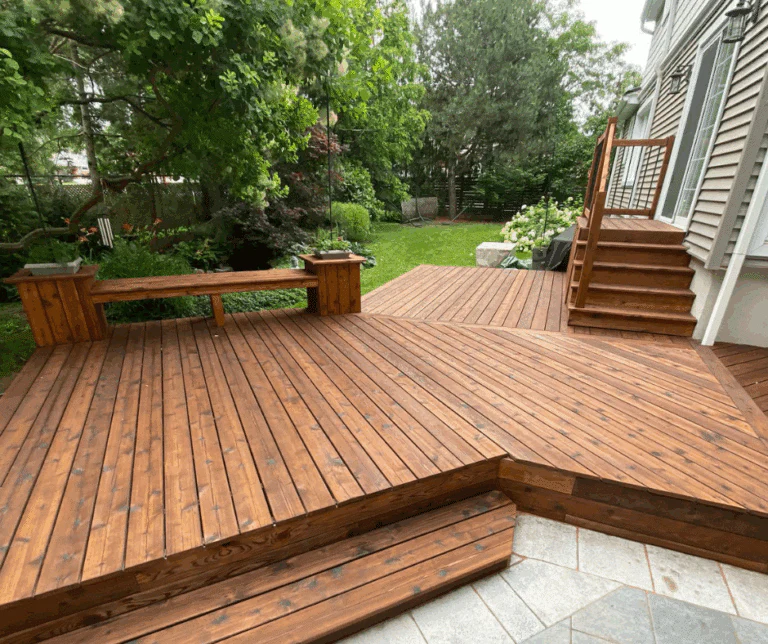
Stain is a natural choice when you like the look of cedar or another wood species and do not want to hide it completely. A semi-transparent brown, gray, cedar tone, or muted neutral can give a fence a finished appearance while keeping the grain visible.
Stain can also be practical on a large privacy fence because it visually belongs with the material. When the finish eventually weathers, the transition can look more gradual than a sharply contrasting opaque coating, depending on the stain type and exposure.
For newer fences with consistent boards, transparent or semi-transparent stain can show off the wood. For older fences with discoloration or mixed replacement boards, semi-solid or solid stain may provide a more even appearance.
Benjamin Moore’s exterior wood guidance describes stain opacities from translucent through solid, with progressively more of the wood grain hidden as opacity increases. That range gives homeowners more options than the simple idea of “brown stain” suggests.
When Paint Makes Sense for a Fence
Paint is worth considering when color is the priority. Maybe the fence needs to match painted trim, create a crisp backdrop for landscaping, or become a dark contrasting element around a modern exterior. An opaque painted finish gives you the most control over that final color.
Paint can also hide visual inconsistencies in the boards better than a transparent finish. But an opaque coating does not make damaged wood disappear. Rotten boards, loose fasteners, failing old paint, algae, dirt, and moisture problems still need to be addressed first.
The existing finish is important too. A fence that has already been painted may not be a simple candidate for transparent stain without extensive stripping. In many cases, staying within a compatible opaque coating system is more realistic than trying to return heavily coated boards to a natural stained appearance.
What About Solid Stain?
Solid stain sits between the two choices in appearance. It provides an opaque or nearly opaque color while allowing the texture of the wood to remain visible. For homeowners who want a uniform fence but still want the finish to feel like it belongs on wood, solid stain can be an excellent option.
It is especially useful on older fences where transparent stain would expose too much uneven weathering. The right product still depends on the existing coating and the condition of the boards, so it should not be applied blindly over whatever is there.
Vancouver Weather Changes the Preparation Process
The most common fence finishing mistake is focusing on color before deciding whether the fence is clean, sound, and dry.
A fence in Clark County can collect algae, moss, mildew, soil splash, pollen, and airborne dirt. Shrubs can hold moisture against the lower boards. Sprinklers may repeatedly wet one section. The shaded side of a fence may stay damp long after the sunny side dries.
Before painting or staining, loose contamination has to be removed and the wood needs adequate drying time. Weathered fibers may need sanding. Failing old coatings may need scraping or removal. Damaged boards should be repaired or replaced before they are covered.
Applying a beautiful finish over a damp or dirty fence is not a durable solution.
Does a New Fence Need to Weather Before Finishing?
New wood is not always ready to coat the day it is installed. Lumber can contain significant moisture, and some boards arrive with a smooth surface that does not readily accept certain stains. The correct waiting period depends on the wood, its moisture condition, the product, and the manufacturer’s instructions.
Instead of following a blanket “wait six months” rule, evaluate the actual wood and the stain or paint system you plan to use. Some products are designed for newer wood with specific preparation; others require a drier or more weathered surface.
This is another reason a professional evaluation can save time. The answer should come from the fence in front of you, not a generic calendar rule.
Which Finish Is Easier to Maintain?
Maintenance depends heavily on the coating type, exposure, preparation, and how failure is allowed to progress.
Transparent and semi-transparent stains tend to weather by fading and losing color, although individual products behave differently. Opaque paints and solid stains can eventually crack, lift, or peel if moisture gets behind the film or the substrate moves. Once a coating is heavily failing, the next maintenance cycle requires more preparation.
The easiest system to maintain is usually the one you inspect before it becomes a major failure. Check the fence each year for exposed wood, fading, lifting finish, green growth, water damage near the soil line, and sprinklers hitting the boards. Early maintenance is far easier than restoring a fence that has been ignored for years.
How to Choose Based on the Look You Want
If you want warm, natural cedar with visible grain, start by looking at transparent or semi-transparent stain. If you want a more consistent wood tone but still want some character, compare semi-solid options. If the fence is weathered and you want uniform color, solid stain is worth considering.
If you want a true painted color that ties directly into the architecture of the home, paint may be the better design choice.
Do not forget to view samples against the house. A stain that looks neutral in the store may read orange, red, gray, or green next to your siding. A dark painted fence can make landscaping pop but may visually reduce a small yard. A light fence can brighten a shaded space but show dirt more quickly.
Paint or Stain: The Bottom Line
Stain is usually the better starting point when preserving the natural character of a wood fence is important. Paint is a strong option when the goal is an opaque architectural color. Solid stain gives homeowners a useful middle path when they want uniformity without completely losing the feel of wood.
Whichever direction you choose, the quality of the preparation will determine whether the finished fence looks intentional or simply covered up.
Elite Edge Painting provides professional fence painting and staining throughout Vancouver, Camas, Washougal, Battle Ground, Ridgefield, and surrounding Clark County communities. We clean and prepare the surface, evaluate the existing finish, and help you choose a coating that fits the fence and the look of your home. Call (360) 550-0237 or request a free estimate to get started.